Showing posts with label Technology. Show all posts

Apple Sued Over 'Fast Booting' Patent which Links To LG


Patently Apple reports that Apple has been hit with a new patent lawsuit targeting "fast booting" used in OS X, a method of utilizing boot configuration information from earlier booting processes to speed the system startup process.


The lawsuit specifically states that Apple's OS X violates "at least Claim 1" of the OSS patent. The claim in question reads as follows: 

"A method for fast booting a computer system, comprising the steps of: A. performing a power on self test (POST) of basic input output system (BIOS) when the system is powered on or reset is requested; B. checking whether a boot configuration information including a system booting state which was created while executing a previous normal booting process exists or not; C. storing the boot configuration information from execution of the POST operation before loading a graphic interface (GUI) program, based on the checking result; and D. loading the graphic user interface (GUI) program."


What is most interesting about the patent and associated lawsuit is that the patent application was initially filed back in 1999 and assigned to LG Electronics. LG is of course a competitor to Apple in the smartphone market, but also serves as a supplier to Apple, primarily through its LG Display arm.

It is unclear, however, whether LG still has any stake in the patent in question, as the assignment on the patent has changed hands multiple times dating back to 2004. LG initially passed the patent off to a company known as Microconnect LLC, but the patent was subsequently passed along to firms by the names of Protimus Technologies LLC and ANPA Inc while also being reissued once along the way. The patent lawsuit has been brought by a Florida-based company called Operating Systems Solutions LLC, which appears to be a previously-unknown entity that may have been created specifically for the purposes of the lawsuit.

Apple is of course no stranger to patent and other types of lawsuits, not only engaging in high-profile disputes with major competitors but also both taking on and being targeted by smaller firms. And while this latest lawsuit may simply be a case of a small patent holding firm seeking to capitalize on its holdings, the patent's historical ties to LG naturally lead to questions about whether yet another of Apple's major competitors is playing a role in the ever-increasing legal entanglements for Apple.

Earth Has a Ring of Anti-Protons !


While it's not as visually cool as what Saturn has going for it, this is still an important development, even if we can't technically "see" the ring with our primitive Earthling eyes.
According to New Scientist, this anti-proton ring joins the previously discovered positron cloud that's also circling the Earth like an invisible shield. Ironically, the anti-protons are 2,000 times more massive than their positron counterparts, but were discovered second. Both are trapped in a donut-like ring called the Van Allen radiation belt that's held in place by the planet's magnetic field.
In the distant future, a spacecraft designed to use anti-protons (or other types of antimatter) as a fuel source could tap into this ring to top off its tanks and head out into the void, said Alessandro Bruno, a member of the University of Rome Tor Vergata team that confirmed the anti-proton area's existence.
Between July 2006 and December 2008, PAMELA detected 28 antiprotons trapped in spiralling orbits around the magnetic field lines sprouting from the Earth’s south pole (Astrophysical Journal Letters, DOI: 10.1088/2041-8205/737/2/l29). PAMELA samples only a small part of the inner radiation belt, but antiprotons are probably trapped throughout it. “We are talking about of billions of particles,” says team member Francesco Cafagna from the University of Bari in Italy.
Twenty-eight antiprotons sounds like nothing, really. But that’s actually a pretty substantial quantity, and verifies the hypothesized but not-yet-evident theory that such a ring might exist. So it looks like now all we need are those super-efficient rockets.


Source:New Scientist [image: New Scientist]

Apple iOS 4.3.5 Jailbreak: iPad, iPod Touch and iPhone 4.3.5 Jailbreak

Apple iOS 4.3.5 was released alongwith fixes for some previous Vulnerabilities in the new mobile operating system.


However, thanks to MuscluNerd, a iPhone Dev Team member, who confirmed on twitter that the new Apple iOS 4.3.5 Jailbreak is still a possibility on all devices like iPad, iPod Touch and iPhone (except the iPad 2) just by pointing the tool at the 4.3.4 IPSW:

Apple iOS 4.3.5 Jailbreak: iPad, iPod Touch and iPhone 4.3.5 Jailbreak

Warning: Those of you, who are relying on a carrier unlock must stay away from Redsn0w Jailbreak.

Since Apple patched comex’s exploit in Apple iOS 4.3.4, this will be a Tethered iOS 4.3.5 Jailbreak. It is still recommended to stick with iOS 4.3.3 for an Untethered Jailbreak.

How to Tethered iPad, iPod Touch and iPhone 4.3.5 Jailbreak

First of all select and downlaod the appropriate program applicable to your device from the given options:
Now please follow these step by step instructions given here under:
Step 1: Start Redsn0w Apple iOS 4.3.5 Jailbreak program, browse for the iOS 4.3.4 firmware file (NOT the 4.3.5) that you downloaded above and point it towards Redsn0w.

Step 2: Once Redsn0w is done with recognizing the firmware file, click Next. Then check the 'Install Cydia' box and leave other options as it is for now. Once done, click Next.

Step 3: Now just follow Redsn0w, it will ask you to shut down your device and plug it in to the computer. Once plugged with computer, follow the onscreen instructions and then click Next to continue.

Step 4: RedSn0w will now guide you on how to put your device in DFU mode. Follow the instructions carefully till your device get’s into DFU mode. Follow these simple steps to put your Device into DFU Mode:
  • First of all,Press and Hold the sleep button for 2 seconds.
  • While holding the sleepbutton,Press the Home button for 10 seconds.
  • Now release the sleep button but continue Holding the home button for about 15 seconds.
Step 5: One in DFU mode your iPhone will restart, Now, just wait while Redsn0w gets installed and jailbreaks your device. Once finished your iPhone, iPad or iPod touch will restart automatically.

Troubleshooting:
Any Windows users seeing 'Waiting for reboot' for too long (more than 20 seconds or so), please try 'shaking' the JB process by unplugging then replugging your USB cable (while letting redsn0w continue to run). Also, try using a USB port 'closer' to your computer (as opposed to on your monitor or behind another hub).


Apple iOS 4.3.5 Jailbreak on iPad, iPod Touch and iPhone 4/3Gs
Here is a video tutorial for Apple iOS 4.3.5 Jailbreak on iPad, iPod Touch 4/3Gs for iPhone 4.3.5 Jailbreak using RedSn0w 0.9.8b:

Second Huge Solar Plant In California


Solar Panels
BrightSource Energy, the California startup that is building the first large-scale solar thermal power plant to break ground in the United States in 20 years, on Friday filed a license application with California regulators to build a second huge solar complex that features new technology.

The 500-megawatt Hidden Hills Solar Electric Generating System would be built in two 250-megawatt phases on 5.12 square miles of privately owned Mojave Desert land in California’s Inyo County on the Nevada border. The site is 45 miles west of Las Vegas and north of BrightSource Energy’s Ivanpah facility now under construction on the California side of the border.


The project is the first to seek approval from the California Energy Commission since regulators rushed to approve nine large solar thermal power plants last year so their developers could qualify for billions of dollars in federal loan guarantees. The loan guarantee program is set to sunset on Sept. 30 and Hidden Hills will test financiers’ appetite for such projects absent such a subsidy.

BrightSource, which is backed by French energy giant Alstom, Morgan Stanley, Google, Chevron and NRG Energy, filed for a $250 million initial public offering in April and has signed contracts to deliver 2,610 megawatts of electricity to utilities Pacific Gas & Electric and Southern California Edison.

The company deploys vast fields of mirrors called heliostats to focus the sun’s rays on a water-filled boiler that sits atop a tower. The resulting steam drives an electricity-generating turbine.

In a sign that solar technology is unlikely to stand still for long in the race to bring more efficient power plants online, BrightSource has increased the height of its “power tower” at the Hidden Hills project to 750 feet from the 459-foot height of those being built at Ivanpah. Each tower at Hidden Hills would be surrounded by a field of 85,000 heliostats.

“The new, higher, 750-foot solar power tower allows the heliostat rows to be placed closer together, with the mirrors at a steeper angle,” the company stated in its license application. “This substantially reduces mirror shading and allows more heliostats to be placed per acre. More megawatts can be generated per acre and the design is more efficient overall.”

BrightSource on Wednesday announced it would incorporate molten salt storage in its power plants to extend their operating hours past sunset. No mention of such a system was made in the Hidden Hills application but its addition would most likely depend on a request from the utility that purchases the complex’s electricity.

The company has set out an ambitious construction schedule, stating that it anticipates ground would be broken by the third quarter of 2012 and Hidden Hills would begin generating electricity in 2015.

In contrast, it took more than three years for state and federal regulators to approve the Ivanpah project, which is being built on land managed by the Interior Department.

BrightSource will largely avoid the feds involvement by building on land leased from a private owner. The company also apparently hopes to sidestep disputes over the impact of its power plants on the imperiled desert tortoise, a controversy that has dogged the Ivanpah project.

According to its license application for Hidden Hills, initial surveys found only two desert tortoises on the project site.

iPhone 5 and ‘simplified iPhone 4′ both due out this fall, report claims


After several reports pointing to a lower-end iPhone set to be released this fall, a new source is now suggesting that along with the iPhone 5 we’ll see a “simplified iPhone 4”, as reported by the Chinese language website Sohu.com.

According to the report, Apple has reached an agreement with China Telecom, China’s state-owned mobile carrier, to bring two devices to the country: the iPhone 5 and a lower-end iPhone, allegedly similar to the iPhone 4, around “the end of October”. As claimed by the source, and as speculated by us many times, the lower-end iPhone model will be cheaper and most likely targeted at developing and emerging markets, such as China:

a more economical version of iPhone to target a broader customer base in developing countries such as China, allowing for an expanded market opportunity.

Apple’s current solution to make the iPhone available to a greater number of customers is to simply sell the previous-generation device for a lower price. While the iPhone 4 has been available for a year, Apple keeps manufacturing the nearly two-year-old iPhone 3GS and selling it for $99 instead of its original price of $199, but now the supply of the iPhone 3GS is dwindling drastically. This approach has its obvious shortcomings, including the device’s aging hardware that developers and Apple itself will be forced to support as long as the device is sold.

The lower-end iPhone will reportedly be similar to the iPhone 4, which has been for sale for over a year, although we don’t yet know much about its hardware or software. According to previous reports on the matter, however, we would guess that this low-end smartphone will be an iPhone 4 with improved internals and perhaps slightly cheaper plastic casing, as opposed to the iPhone 4’s glass enclosure, in order to reduce manufacturing costs, and therefore the price.

This report also, once again, sparks up the debate over whether the next iPhone will be released in September or October, since the source points to an October release, at least in China. I believe, as we have speculated previously, that the US release will take place sometime in September with an international release in October, since the iPhone 5 has allegedly reached final testing stages. The iPhone 5 is expected to be announced by Apple at the company’s traditional music and iPod event in September and released a few weeks later.

(via BGR)

Battlefield: Bad Company 2 Released on Sony Ericsson Xperia PLAY


The release of Battlefield: Bad Company 2, has made available the award winning FPS franchise by Electronic Art and DICE on Sony Ericsson Xperia PLAY, the PlayStation certified gaming smartphone.


Sony Ericsson's Market Development Head, Dominic Neil-Dwyer says:

As Xperia Play becomes available in more markets across the world, the portfolio of games continues to grow and so we're delighted to announce the availability of Battlefield: Bad Company 2 for Xperia Play. We aim to give consumers the best possible gaming experience on a smartphone and Battlefield: Bad Company 2 for Xperia Play is the latest title from EA to bring one of the most popular gaming franchises to our consumers.
The game, now available for download takes full advantage of Sony Ericsson Xperia PLAY smartphone's outstanding graphic capabilities and game-changing control pad to deliver a better and realistic, fast-paced gameplay to the Android operating system for the first time.

Bad Company 2 for Xperia Play features fourteen single-player missions across five intensely detailed battle zones. It also includes fourteen weapons ranging from a knife to rocket-propelled grenades and multiple vehicle types, including tanks and helicopters. An iOS version of the game is now also available at the App Store.

Battlefield: Bad Company 2 is available to download today for Sony Ericsson Xperia PLAY customers, adding to the more than 100 optimised games available for download on the world’s first PlayStation certified smartphone.

Explosion of Mobile Gaming


Geekaphone, an online resource for the mobile industry, has revealed stats about mobile gaming industry. They have been researching the mobile gaming industry and revealed figures for 2011.
A few key points that stand out are:
  • The mobile gaming industry is predicted to reach $54 Billion by 2015
  • 84% of tablet owners play games
  • 70 – 80% of all mobile downloads are games
  • Android is soon to overtake Apple in number of total available apps
  • In-game purchases should overtake pay-per-downloads by 2013
  • Angry Birds has been downloaded 140 million times
  • Developers made $87 million in ad revenue in 2010 and will grow 10 fold by 2015
Infographic Mobile Gaming Statistics Mobile Gaming Industry Statistics for 2011 [Inforgraphic]

iCloud and iWork Beta Launched For Developers


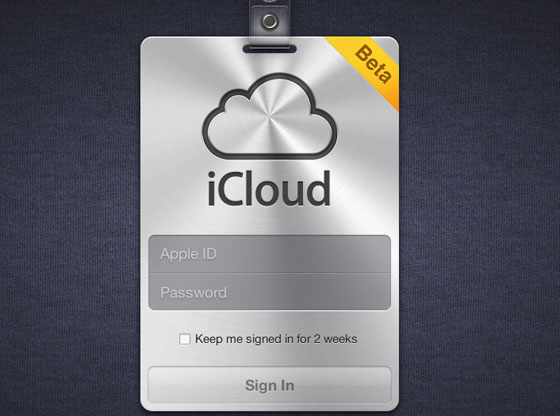
Apple seems to have opened up the iCloud Beta on iCloud.com. Notably, the login page is nearly identical to a leak from the days before the original iCloud announcement. We were doubtful of the screen at the time, but it appears to have been legitimate. 

There's some mixed reports about people being able to login. We have reports of both developers and non-developers having success and trouble logging in. 


iWork Beta with iCloud support was also seeded to developers: 

World's Smallest Battery Yet is About as Thick as a Human Hair


Nanotechnology promises to enable tiny, intricate circuits powering devices on any surface. But unless they’re harvesting energy from something like a heartbeat, the devices can only be as small as the smallest battery.
Now researchers at Rice University have combined the two, packing an entire lithium-ion battery into a single nanowire. The developers say it’s as small as such a device can possibly get.
Researchers led by Rice professor Pulickel Ajayan built a hybrid energy storage device, which serves as a battery and a supercapacitor. The first version sandwiched an electrolyte between a nickel/tin anode and a cathode made of a polymer called polyaniline. The cathode also served as a supercapacitor, storing lithium ions in bulk, as this writeup by Rice University explains. The prototype proved that lithium ions would move through the electrolyte and into the cathode.
Then Ajayan and colleagues incorporated this structure into a single nanowire, through a complicated process of etching and chemical washing. The goal is to make nanowires with ultra-thin separation between electrodes, so the device can remain as small as possible.
The completed wire-batteries are about 50 microns tall, which is roughly the diameter of a human hair, according to Rice.
For now, they can only charge and discharge about 20 times before they die, but researchers are trying to optimize them to last longer. The research is published in the journal ACS Nano Letters.
[Popsci via PhysOrg]