Showing posts with label Gadget. Show all posts

Apple iOS 4.3.5 Jailbreak: iPad, iPod Touch and iPhone 4.3.5 Jailbreak

Apple iOS 4.3.5 was released alongwith fixes for some previous Vulnerabilities in the new mobile operating system.


However, thanks to MuscluNerd, a iPhone Dev Team member, who confirmed on twitter that the new Apple iOS 4.3.5 Jailbreak is still a possibility on all devices like iPad, iPod Touch and iPhone (except the iPad 2) just by pointing the tool at the 4.3.4 IPSW:

Apple iOS 4.3.5 Jailbreak: iPad, iPod Touch and iPhone 4.3.5 Jailbreak

Warning: Those of you, who are relying on a carrier unlock must stay away from Redsn0w Jailbreak.

Since Apple patched comex’s exploit in Apple iOS 4.3.4, this will be a Tethered iOS 4.3.5 Jailbreak. It is still recommended to stick with iOS 4.3.3 for an Untethered Jailbreak.

How to Tethered iPad, iPod Touch and iPhone 4.3.5 Jailbreak

First of all select and downlaod the appropriate program applicable to your device from the given options:
Now please follow these step by step instructions given here under:
Step 1: Start Redsn0w Apple iOS 4.3.5 Jailbreak program, browse for the iOS 4.3.4 firmware file (NOT the 4.3.5) that you downloaded above and point it towards Redsn0w.

Step 2: Once Redsn0w is done with recognizing the firmware file, click Next. Then check the 'Install Cydia' box and leave other options as it is for now. Once done, click Next.

Step 3: Now just follow Redsn0w, it will ask you to shut down your device and plug it in to the computer. Once plugged with computer, follow the onscreen instructions and then click Next to continue.

Step 4: RedSn0w will now guide you on how to put your device in DFU mode. Follow the instructions carefully till your device get’s into DFU mode. Follow these simple steps to put your Device into DFU Mode:
  • First of all,Press and Hold the sleep button for 2 seconds.
  • While holding the sleepbutton,Press the Home button for 10 seconds.
  • Now release the sleep button but continue Holding the home button for about 15 seconds.
Step 5: One in DFU mode your iPhone will restart, Now, just wait while Redsn0w gets installed and jailbreaks your device. Once finished your iPhone, iPad or iPod touch will restart automatically.

Troubleshooting:
Any Windows users seeing 'Waiting for reboot' for too long (more than 20 seconds or so), please try 'shaking' the JB process by unplugging then replugging your USB cable (while letting redsn0w continue to run). Also, try using a USB port 'closer' to your computer (as opposed to on your monitor or behind another hub).


Apple iOS 4.3.5 Jailbreak on iPad, iPod Touch and iPhone 4/3Gs
Here is a video tutorial for Apple iOS 4.3.5 Jailbreak on iPad, iPod Touch 4/3Gs for iPhone 4.3.5 Jailbreak using RedSn0w 0.9.8b:

PS Vita Release: Sony Playstation Vita Release Date, Price and Games


Sony has finally announced Sony Playstation Vita Release, the successor for the Sony PSP. PS Vita, the new portable gaming device from Sony is designed to provide users with a whole new level of gaming experience along with some great connectivity features to stay connected on your social network.
Sony, at E3 2011 had announced the much awaited Sony PS Vita Release, revealing the Sony PlayStation Vita (codename NGP) Features, Specs, Price and Release Date.

The new multi-touch screen and a rear multi-touch pad will be a great addition, helping with the users game handling capabilities. The WiFi and 3G connectivity features also allows gamers to connect, share and play with all their friends on the go. With the microphone feature, users can actually communicate on real time, providing an ultimate gaming experience. Sony also introduces a new feature called ‘LiveArea’, where users can access all the latest information of their favorite games on the PlayStation Network.

Still, the announcement will bring disappointment to many gamers, who were expecting Sony Playstation Vita Release earlier in US and Europe for holiday sales, with an OLED touchscreen up front and a clever touchpad controller surface on the rear. Since the new PS Vita was spotted passing through the FCC, a day ago, speculating a PS Vita Release this fall in US.

PS Vita Release: Sony Playstation Vita Release Date
Sony PlayStation Vita, the new portable game console will go on sale in early 2012. PS Vita Release is set in early 2012 for U.S. and Europe, following a Sony Playstation Vita Release in Japan during this Christmas by the end of 2011.

Sony Vice President, Kazuo Hirai termed it a 'phased global rollout' in 2012 rather than a delay. He said the scheduling was intended to give Sony time to prepare 'solid' game offerings.

PS Vita Release: Sony Playstation Price
Despite of recent price cuts for Nintendo 3DS, a popular competitor handheld game console released earlier this year, the PS Vita will cost $249 in the US for the WiFi-only model, and $299 for the 3G-equipped version. In Japan it will start from 24,980 yen.

iPhone 5 and ‘simplified iPhone 4′ both due out this fall, report claims


After several reports pointing to a lower-end iPhone set to be released this fall, a new source is now suggesting that along with the iPhone 5 we’ll see a “simplified iPhone 4”, as reported by the Chinese language website Sohu.com.

According to the report, Apple has reached an agreement with China Telecom, China’s state-owned mobile carrier, to bring two devices to the country: the iPhone 5 and a lower-end iPhone, allegedly similar to the iPhone 4, around “the end of October”. As claimed by the source, and as speculated by us many times, the lower-end iPhone model will be cheaper and most likely targeted at developing and emerging markets, such as China:

a more economical version of iPhone to target a broader customer base in developing countries such as China, allowing for an expanded market opportunity.

Apple’s current solution to make the iPhone available to a greater number of customers is to simply sell the previous-generation device for a lower price. While the iPhone 4 has been available for a year, Apple keeps manufacturing the nearly two-year-old iPhone 3GS and selling it for $99 instead of its original price of $199, but now the supply of the iPhone 3GS is dwindling drastically. This approach has its obvious shortcomings, including the device’s aging hardware that developers and Apple itself will be forced to support as long as the device is sold.

The lower-end iPhone will reportedly be similar to the iPhone 4, which has been for sale for over a year, although we don’t yet know much about its hardware or software. According to previous reports on the matter, however, we would guess that this low-end smartphone will be an iPhone 4 with improved internals and perhaps slightly cheaper plastic casing, as opposed to the iPhone 4’s glass enclosure, in order to reduce manufacturing costs, and therefore the price.

This report also, once again, sparks up the debate over whether the next iPhone will be released in September or October, since the source points to an October release, at least in China. I believe, as we have speculated previously, that the US release will take place sometime in September with an international release in October, since the iPhone 5 has allegedly reached final testing stages. The iPhone 5 is expected to be announced by Apple at the company’s traditional music and iPod event in September and released a few weeks later.

(via BGR)

Free Samsung Nexus S: Today Offer from Best Buy Mobile


What about a "Free Samsung Nexus S"? Well, we are not kidding, infact its Today Offer from Best Buy Mobile, that is offering the Nexus S for free today only.

The catch is you need a two-year contract with Sprint, T-Mobile, or AT&T to get it. The unlocked model will still be full price.

All variants (3G version on T-Mobile or AT&T / 4G version on Sprint) will be free when you sign up for a new contract by either setting up a new line or upgrading a current handset.


While this device may not have dual-core this and that, it’s still one of the fastest and most stable devices you’ll ever use. As a “Nexus” device, you won’t find another handset in the world with this pure of an Android experience. The Nexus S is one of our favorite Android phones out there, offering a clean version of Gingerbread, and first dibs on software updates from Google.

The offer ends at 11:59 p.m. tonight, so get at it. Here under is the Press Release by Best Buy Mobile about Today Offer:

One-Day Exclusive Offer: Best Buy Mobile Offers All Versions of Nexus S from Google for Free on Aug 3

Available on AT&T, Sprint and T Mobile at Best Buy, Best Buy Mobile specialty stores and online. Offer runs from Aug. 2 at 11 p.m. CST to Aug. 3 at 11:59 p.m. CST
MINNEAPOLIS, August 2, 2011 – Best Buy Mobile today revealed an exclusive one-day sale on Nexus S from Google phones valid on all carriers who support the device - AT&T, Sprint and T-Mobile. Customers can receive a free Nexus S phone, either as a new phone or an upgrade purchase, with two-year activation at all Best Buy, Best Buy Mobile specialty stores, and online at BestBuy.com/Mobile.
Nexus S is a pure Google experience phone and runs Android 2.3, Gingerbread, the fastest version of Android available, and will be offered free starting tonight at 11:00 p.m. CST, through  Aug. 3, at 11:59 p.m. CT.
In addition to the most smartphones under one roof, including all three versions of Nexus S, Best Buy Mobile offers an array of services aimed at improving customers’ experience, including Walk Out Working, Upgrade Checker, Happy 24 and a full array of accessories for customers to protect and personalize their device.

About Best Buy Mobile
Best Buy Mobile was founded in 2006 with a goal of changing the way consumers shop for and purchase mobile phones in America. Today, Best Buy Mobile is in every Best Buy store and also has 206 Best Buy Mobile specialty stores around the country. Best Buy Mobile features one of the largest selections of carriers, handsets and accessories available anywhere. Employees undergo at least 80 hours of intensive training, as well as continuing education on mobile phone technology and trends to help customers get the most of their mobile phones. For more information about Best Buy Mobile, visit www.bestbuy.com/mobile or www.bestbuymobile.com

About Best Buy
Best Buy Co., Inc. (NYSE: BBY) is a leading multi-channel global retailer and developer of technology products and services. Every day our employees – 180,000 strong – are committed to helping deliver the technology solutions that enable easy access to people, knowledge, ideas and fun. We are keenly aware of our role and impact on the world, and we are committed to developing and implementing business strategies that bring sustainable technology solutions to our consumers and communities. For information about Best Buy, visit www.bby.com

Battlefield: Bad Company 2 Released on Sony Ericsson Xperia PLAY


The release of Battlefield: Bad Company 2, has made available the award winning FPS franchise by Electronic Art and DICE on Sony Ericsson Xperia PLAY, the PlayStation certified gaming smartphone.


Sony Ericsson's Market Development Head, Dominic Neil-Dwyer says:

As Xperia Play becomes available in more markets across the world, the portfolio of games continues to grow and so we're delighted to announce the availability of Battlefield: Bad Company 2 for Xperia Play. We aim to give consumers the best possible gaming experience on a smartphone and Battlefield: Bad Company 2 for Xperia Play is the latest title from EA to bring one of the most popular gaming franchises to our consumers.
The game, now available for download takes full advantage of Sony Ericsson Xperia PLAY smartphone's outstanding graphic capabilities and game-changing control pad to deliver a better and realistic, fast-paced gameplay to the Android operating system for the first time.

Bad Company 2 for Xperia Play features fourteen single-player missions across five intensely detailed battle zones. It also includes fourteen weapons ranging from a knife to rocket-propelled grenades and multiple vehicle types, including tanks and helicopters. An iOS version of the game is now also available at the App Store.

Battlefield: Bad Company 2 is available to download today for Sony Ericsson Xperia PLAY customers, adding to the more than 100 optimised games available for download on the world’s first PlayStation certified smartphone.

Explosion of Mobile Gaming


Geekaphone, an online resource for the mobile industry, has revealed stats about mobile gaming industry. They have been researching the mobile gaming industry and revealed figures for 2011.
A few key points that stand out are:
  • The mobile gaming industry is predicted to reach $54 Billion by 2015
  • 84% of tablet owners play games
  • 70 – 80% of all mobile downloads are games
  • Android is soon to overtake Apple in number of total available apps
  • In-game purchases should overtake pay-per-downloads by 2013
  • Angry Birds has been downloaded 140 million times
  • Developers made $87 million in ad revenue in 2010 and will grow 10 fold by 2015
Infographic Mobile Gaming Statistics Mobile Gaming Industry Statistics for 2011 [Inforgraphic]

White Samsung Galaxy S2: Release Date, Specs and Price

The white version of best selling Samsung Galaxy S2 has been hinted for a September 2011 release in the UK. White Samsung Galaxy S2, functionally identical to the existing black Galaxy S2, which hit the market 85 days ago, and has already racked up 5 million sales record with Samsung. The new White Samsung Galaxy S2 model means another 5 million units sale, which seems to be a very smart move on the foot print of Apple.

White Samsung Galaxy S2 Features and Specs

It does appear that white is the only difference from the black version with no change to specs. The White Samsung Galaxy S2, like its Samsung Galaxy S2 black version, is Worlds Thinnest Smartphone, loaded with Android mobile operating system. The Samsung Galaxy S2 is the successor to the critically acclaimed Samsung Galaxy S, featuring:
  • 1.2 GHz Dual-Core SoC Processor
  • Samsung Exynos Processor (GT-I9100 model) or Nvidia Tegra 2 Processor (GT-I9103 model)
  • 1GB RAM
  • 10.9 Centimetre (4.3 inches) WVGA Super AMOLED Plus Display
  • 8 Megapixel LED Flash Camera with HD 1080p videos recording
  • USB Host (OTG) Function Support
  • Upgraded version of Android, officially known as TouchWiz 4.0
  • Enhanced Accessibility with Multi Touch Gestures and Clean Widget Arrangements
  • It also supports Mobile High-definition Link (MHL), which allows up to 1080p uncompressed video output with HDMI while charging the device at the same time.

White Samsung Galaxy S2 Release Date

The incoming White Samsung Galaxy S2 variant was first previewed by a UK retailer earlier in the week, though the original product page suggested an August 15 launch and has since been taken down.

Since, Samsung Galaxy S2 is going to be released for sale in the US, in August 2011 through Verizon. Its white version, Samsung White Galaxy S2 Release Date is expected to be somewhere in late September or October 2011.

White Samsung Galaxy S2 Price

Right now it appears one can only pick White Samsung Galaxy S2 at full retail price, between £410 and £500 ($669 to $800 USD) depending on ones country.

White Samsung Galaxy S2 Price is listed at for an unlocked, SIM-free model, though Samsung UK tells us that the white version will be made available through carriers as well, so iTechWhiz expect some easy cheap subsidized deals and offers.

A Transparent Battery to Power Next-Gen See-Through Gadgets


Stanford researcher Yi Cui looked across the field of transparent electronics and saw that all was not equal. While all other major electronics components--things like transistors, displays, and other circuitry--have been made transparent, no one had taken the time and effort to create a transparent power source. And you can’t have a fully transparent device without a transparent battery. So Cui made one.


There are a few ways to make an electronic component transparent. One is to make it so thin that it doesn’t register with the human eye. Or you can make the component take the form of a pattern whose features are so small they are invisible. Some battery components are easy to render transparent by shrinking them, but electrodes are particularly difficult to make thin. A super-thin electrode isn’t energy dense, and therefore it doesn’t store up enough power to be useful in any realistic way.

So Cui opted for the second approach. He and his team figured that if you can pattern the electrode into a superfine mesh, you can still build an energy dense battery. With enough electrode material distributed across the mesh, a battery can still hold a significant charge.

So using a relatively straightforward lithography method, they built a framework for the mesh in a soft, clear, spongy material called PDMS. To make a complete battery, they simply need two of these layers filled with electrode material--in this case, they used the makings of a standard lithium-ion battery--with a gel electrolyte (also clear, of course) sandwiched in between. Encase the whole thing in plastic, and you’ve got a see-through battery.

In the lab, the batteries have been used to power a small LED light (which can be viewed straight through the battery itself). Cui thinks the batteries should be roughly half as energy dense as a equally-sized regular battery. So right now the prototype is about as powerful as a NiCad battery, but Cui says he and his team should be able to improve that by an order of magnitude by reducing inefficiencies in the prototype design and layering batteries one atop the other. Depending on how it scales, the Stanford team thinks such transparent batteries could be commercialized in just two to four years.

[via popsci]

First Windows "Mango" Phone Unveiled


The first smartphone based on the new "Mango" edition of Microsoft's Windows Phone platform was unveiled on Wednesday in Tokyo. The phone is the first of several handsets due over the next few months, that Microsoft hopes will signal its return to the smartphone market as a serious player. (Video of the new phone and its launch is available on YouTube.) If that wish sounds familiar, it is. This time last year the company was hoping the first version of the Windows Phone 7 would accomplish the same thing. Far from boosting its market share, the introduction of the new operating system saw Microsoft lose share.

But a year earlier during the first quarter of 2010, its market share was 7.1 percent, the market research company said. In terms of handsets shipped, those with Windows Phone 7 or Windows Mobile fell from 3.9 million to 2.8 million phones in the two periods. Mango, officially Windows Phone 7.5, adds some 500 improvements to the Windows Phone 7 platform, according to the company. Built by Fujitsu Toshiba Mobile Communications, the phone will be available in September or after. The company is one of several partners Microsoft is working with on Mango handsets.

The Finnish cell phone maker threw its weight behind Windows Phone 7 earlier this year when it announced a wide ranging agreement with Microsoft to collaborate on future handsets and technologies. Nokia is losing market share to aggressive competitors, but it remains one of the world's largest manufacturers of smart phones, so it has the potential to help Microsoft shift the market. The launch of the phone came just hours after Microsoft signed off on the operating system and declared it ready to be installed in consumer handsets. That should mean additional phones will get launched in the coming weeks. Bluetooth and WiFi are included in the CDMA-based phone.

How to Shoot Your Own 3D Movie


But there's one category of 3D gear for the home that doesn't require a bank loan: 3D video cameras. I'm not talking about James Cameron's Pace camera rigs here; these are ordinary consumer-grade camcorders that are affordable and as easy to use as run-of-the-mill video cameras. They are a surprisingly accessible first step into 3D video. You can see the video�in 3D and without glasses on the cameras' own displays. It's no accident that some of these cameras' manufacturers are also selling 3D TVs they are banking on user generated content partially filling the void until Hollywood produces more 3D Blu-rays.


And that strategy may work: There are already subcultures of 3D enthusiasts shooting everything from homemade 3D nature clips to 3D music videos and distributing them online. As for the cameras themselves, there are several coming to market at prices from a few hundred bucks to just under two thousand. The rough patches have more to do with the half-evolved infrastructure of at-home 3D equipment and software than with the cameras themselves. the cameras. Pricewise, 3D cameras fall into two categories: For $1000 to $1700, you can get a full-feature 3D HD camcorder with optical zoom, high-end sensors and processors that can record at high bit rates which translate directly to higher video quality. Below $1000, there are several easy-to-use 3D video cameras, but what you get varies from device to device.

The most straightforward of the cheaper bunch is the Sony 3D Bloggie, a camera that resembles the once popular but now defunct Flip video camera, but with two stereoscopic lenses. Primarily a 3D video camera, it can shoot 3D stills as well. Reversing those priorities is the Fujifilm FinePix Real 3D W3, a 3D still camera that can also shoot 3D video. Perhaps the weirdest device in the group is the HTC Evo 3D, a full-feature smartphone with integrated 3D camera that takes both still photos and video. If the $1000-and-above 3D camcorders are analogous to SLR still cameras, then these more affordable cameras are comparable to pocket point-and-shooters.

Apple to Release OS X Lion and New MacBook Airs on Wednesday?

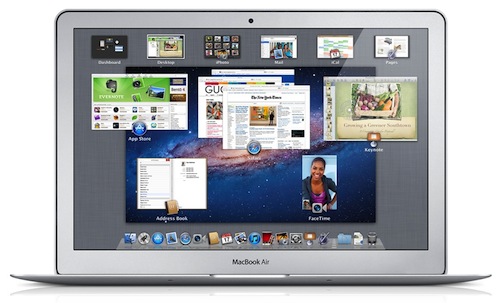
AppleInsider reports that this Wednesday may finally be the day that OS X Lion and new MacBook Air models finally begin shipping as consumers have been anxiously awaiting the releases.
According to people with proven track records who would be in a position to know, the new product launches are set to occur later this week. Specifically, one person said the products would be released on Wednesday at 8:30 a.m. Eastern.

The latest details align with what AppleInsider was told earlier this month, when it reported that new MacBook Air models with backlit keyboards and Thunderbolt ports would launch the week of July 21.

Those details 
were reaffirmed late last week in a separate report that corroborated other details, including the fact that Apple is expected to do away with the entry-level 64GB solid-state flash hard drive option. Instead, the new MacBook Airs are expected to have a minimum of 128GB in capacity.


Apple has been reported to be holding new hardware launches until OS X Lion is ready so that it can ship the machines with the latest operating system pre-installed. A number of other new hardware updates are said to be pending, including a Mac mini refresh and an updated LED Cinema Display. New Mac Pro models have also been rumored for release later this month or early next month. All of the new releases are said to support the new Thunderbolt high-speed data connectivity standard.


A few weeks ago, Apple began undertaking preparatory measures to unveil Lion. While it was initially believed that the operating system could have gone on sale as soon as last week, there have been rumors of last-minute holdups associated with the logistics and infrastructure related to Apple's switch to a digital distribution method through the Mac App Store. 


Lion Mac App Store


The Golden Master of Lion was seeded to developers on July 1. The term "Golden Master" means that the software is viewed as a final build that will be identical to the software released to the general public.

While Lion and the new MacBook Air models are said to be set to launch this week, there has been no specific indication given regarding any other hardware. However, Apple provided its own evidence of a forthcoming refresh to its 
LED Cinema Display last week, when it posted images on its site showing a Thunderbolt-equipped display with the new part number "MC914."

Supply of Apple's white MacBook has also been severely constrained since 
late June, suggesting a change to the product could be forthcoming. However,AppleInsider has received no indication of an imminent hardware refresh.

That would leave just the Mac mini and Mac Pro as the only Mac hardware not updated in 2011. In June, 
CNet reported that Apple planned to update both the Mac Pro and Mac mini either at the end of July or the first week of August. The Mac mini was last refreshed in June 2010, while the Mac Pro was last updated a month later, in July.


Thin-film flexible 'Paperphone' created


Researchers from the Human Media Lab at Canada's Queen's University have created a fully-functioning floppy E-Ink smartphone, which they also refer to as a paper computer. Like its thicker, rigid-bodied counterparts, the Paperphone can do things like making and receiving calls, storing e-books, and playing music. Unlike them, however, it conforms to the shape of its user's pocket or purse, and can even be operated through bending actions.

"This computer looks, feels and operates like a small sheet of interactive paper," said its creator, Roel Vertegaal, who is also the director of the Human Media Lab. "You interact with it by bending it into a cell phone, flipping the corner to turn pages, or writing on it with a pen."

The device has a 9.5-cm (3.74-inch) thin film flexible E-Ink display, underneath which is a flexible printed circuit incorporating resistive bend sensors. Those sensors allow it to be programmed to recognize different types of bending gestures, which will subsequently result in it doing things such as navigating menus, making calls, selecting songs, or any other function. A built-in Wacom tablet also allows users to draw on its screen – making it even more paper-like.
When not actually being operated, the Paperphone consumes no electricity. Vertegaal's team have also created a similar device, the Snaplet, which can be worn like a wristband. It operates as a watch when in a convex state, becomes a PDA when flat, and can be used as a phone when turned concave.
The technology is the result of a collaboration between Queen's University and Arizona State University, and will be officially presented on May 10th at the CHI 2011 conference in Vancouver.
"This is the future," said Vertegaal. "Everything is going to look and feel like this within five years."
Source: Gizmag

EvoMouse: Any Flat Surface Is Now Your Multitouch Trackpad


We've seen virtual keyboards before, but not many virtual trackpads, if any in the consumer space. EvoMouse is here to change that, bundling their input device in the cutest piece of plastic possible.


Essentially, you place the toy dog on the surface of your choosing, and its eyes beam out two infrared beams which track your finger movements. You can click, double-click, right click, drag, drop, pinch and swipe your way around a computer desktop. And if you're in need of a keyboard, EvoMouse will project one of those for you as well.


The device can connect via Bluetooth or USB, and works with Windows, Blackberry, Symbian and Windows Mobile platforms. Pricing and availability details are still scarce, however.

Source: Gizmodo via PocketLint via Gizmag

A beautiful but creepy vision of the "smart glass" future

Materials mnufacturer Corning put together a futurist video last month called "A Day Made Of Glass," which has spiraled into stratospheric popularity on YouTube. The premise of the video is that we're about to live in an era of ubiquitous touchscreens (made with glass) and smart windows (made of glass) as well as appliances like stoves which are also made with glass.


What's striking about the video is mostly how we see the touch screens working, and the way the mobile devices seamlessly network with household appliances, TVs, and bendable flat screen computers. There's also a very paranoia-inducing, panopticon feeling to what we're seeing. As one person walks along, we see giant pictures of her (or her avatar?) leaping up the walls of buildings. And when she walks into a store, she's shown pictures of herself in the clothes she might want to try on. A world made of glass may promise easy information access, but it also seems to be a world where everybody is always looking at themselves and each other to an alarming degree.
Still, I wouldn't say no to some of this tech. Especially the interface where you plop your phone down onto a surface and it instantly networks with it and allows you to get a large screen version of the data on your mobile.
Source: io9

How to Activate the Best Secret Feature In Your iPad


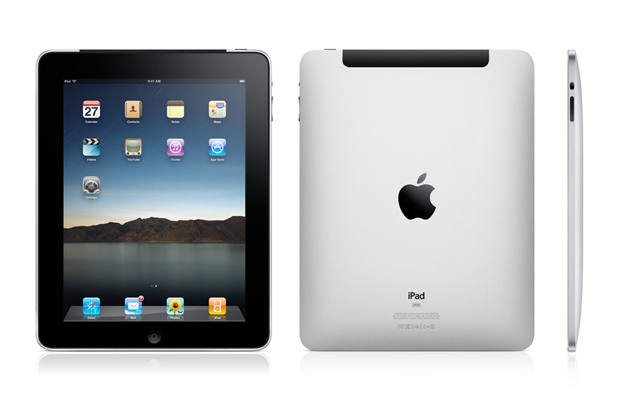
Your new iPad—and old too, with iOS 4.3—has a new hidden feature that Apple doesn't want you to know about: Extra multi-touch gestures that completely changes the iPad experience—for the best.


New iPad hidden gestures

• Swipe four or five fingers—to the left or to the right—to navigate through open applications.

• Swipe four fingers up to access the running apps tray and playback buttons, including Airplay controls.

• Pinch with all your fingers to go to the home screen from any app, without touching your home button.
For example: With a simple hand swipe, to the left or right, you will be able to navigate through running applications. Once you try it, you won't be able to go back.
Sadly, Apple doesn't want you to use these features yet. They could have included the switch in the general preferences for everyone, but right now this is only available for developers, so they can give feedback.

It will "only" cost you $5

The good news is that you can activate them and it's really easy: It only takes one click. The bad news is that you have to pay an extra $5 for Xcode 4, in the Mac OS X App Store.
Here's how to do it:

1. Purchase Xcode 4 and install it.


2. Launch Xcode and connect your iPad to your computer. It will appear in the Xcode's devices list.

3. Click on the "Use for development" button.

4. When it asks you to enter your iOS developer credentials in the dialog box, click cancel. It will give you an error. Disregard it.

5. Once the developer mode activation is completed, go to your iPad general preferences menu and turn on the new multi-gestures.


That's all. Your $5 multitasking gestures are ready to be enjoyed. You will soon discover that it was totally worth the $5.
Alternatively, you can wait until the upcoming iOS 4.3 jailbreak, which will allow you to activate this feature for free with a simple app. Hopefully, it will come out soon. 
Source: Gizmodo

iOS 4.3 Is Here—Check Out What’s New

This summary is not available. Please click here to view the post.

Apple’s iOS Update Speeds Web Browsing, Expands AirPlay


The next operating system upgrade for the iPhone, iPod Touch and iPad is landing sometime this week, and customers can look forward to major improvements in Safari performance and AirPlay media streaming.

Wired.com reported on most of the changes in iOS 4.3 when the beta released January. The newest additions that Apple announced last week included a significant speed boost to the Safari web browser, using the new Nitro JavaScript engine, which should make JavaScript run twice as fast.

Additionally, the AirPlay streaming feature has been expanded so that you can stream video played inside Safari or a third-party app to an Apple TV. Previously, AirPlay video streaming was limited to the Videos app on the iPad.

Wired.com got an early look at the iOS 4.3 gold master (usually the official version that ships), and it’s pretty slick.

Benchmark tests Wired.com ran using SunSpider showed a significant speed boost in Safari’s JavaScript performance between iOS 4.2 and iOS 4.3.

An iPhone 4 running iOS 4.3 completed the test in 4,340 milliseconds, and an iPhone 4 running iOS 4.2 completed the same test in 10,626.4 milliseconds (fewer milliseconds is better). That makes iOS 4.3 about 59 percent faster than iOS 4.2 with JavaScript rendering.


So when iOS 4.3 ships this week, iPad 2 owners won’t be the only people getting a big speed boost. A significant increase in JavaScript performance means web browsing on JavaScript-heavy sites such as Google’s mobile apps (Voice, Docs and Reader), Facebook and others should be zippier.

As for AirPlay, I used an iPhone 4 to play a YouTube video and was able to hit the AirPlay button to send it to straight to the Apple TV 2. Being able to AirPlay YouTube is pretty nifty, because using the Apple TV’s remote control to browse YouTube is a huge pain in the rear; it’s much easier to search for YouTube clips using the iPhone. iOS 4.3’s expanded AirPlay support will be a nice addition for anyone with the new Apple TV.

The iOS 4.3 is due out sometime this week
Source: Wired

Everything You Need to Know About Near Field Communication

Smartphone makers, wireless carriers, and credit card companies have all proclaimed their love for near field communication over the last week. And we share their enthusiasm: NFC has a lot of exciting potential. Soon enough, we'll be able to make payments, unlock our houses, stop worrying about our cumbersome Wi-Fi passwords, and hop on the subway without a transit pass, all from our phones. Here's how.


What Is NFC?
NFC is a short-range, low-power communications protocol between two devices. One device, the initiator, uses magnetic induction to create a radio-wave field that the target can detect and access, allowing small amounts of data to be transferred wirelessly over a relatively short distance (in NFC's case, the distance must be less than 4 inches). If that sounds a lot like RFID, the tech used by, for example, wireless toll-collection devices like EZ-Pass and FasTrak, it's probably because NFC is pretty much an evolved form of RFID. The difference is that RFID is a one-way street: Your EZ-Pass transmitter beams your $4.25 toll to the tollbooth's receiver, and that's the extent of the transaction. But, crucially, NFC is two-way, allowing your NFC-enabled gadget to both send and receive information.
Compared to other wireless protocols like Wi-Fi or Bluetooth, NFC is exceedingly slow, with a maximum data transfer speed of 0.424 Mbps, less than a quarter that of Bluetooth. But NFC has several key advantages over Bluetooth: It consumes a mere 15 mA of power (practically nothing for today's jumbo smartphone batteries), it has the possibility for greater security (more on that in a bit), and it forgoes the involved "pairing" process of Bluetooth entirely. Bluetooth needs to be configured; NFC is completely effort-free, requiring nothing more than a tap.

Google Nexus S: Google's Nexus S, made by Samsung, is the first NFC-compatible smartphone in the U.S.  Google


What Can You Do With NFC?

The three main concepts that the NFC Forum, the main association of companies promoting NFC, is pushing are "sharing, pairing, and transaction."
Transaction is the most obvious of the three, and the one we'll probably start seeing first. A smartphone with an NFC chip could very easily be configured to work as a credit or debit card. Just tap your phone against an NFC-enabled payment terminal, and bam, money spent, consumerism upheld, everyone's happy. But that's really only the start of what NFC can do in terms of transaction.
The other contents in your wallet aren't safe from NFC takeover, either, which is sure to enrage the formerly bulletproof wallet industry. NFC could work well for public transit passes, library cards, hotel room keycards, and office building passcards. Even government-issued IDs like driver's licenses and passports can be replaced or augmented with NFC, though the security concerns there could push such applications further into the future. But the point is, it's all possible, and relatively easy. Even keys could someday become a relic of the past, replaced by the tap of a phone to a lock.
"Sharing" is a little bit trickier, due to the limitations of the tech. Mostly, it'll be used much like QR codes--(the square barcode-like tags scannable by your cellphone camera--are used now, just without the need to open an app and take a picture. An active NFC-enabled device like a smartphone can interact either with another active NFC device or with a passive tag. That tag is basically just a little chip that's embedded with some kind of data to transfer--maybe it's in a printed ad, and provides a URL for more information. Those passive tags don't require power, either, instead relying on the RF field created by your phone, so you can just tap your phone to the tag and have a little bit of data--often a URL--beamed to your phone.
Debbie Arnold of the NFC Forum says "the concept of tag-reading is really exciting to me," as those passive, unpowered tags are very cheap and could be embedded in all kinds of places. Tap your phone against a tag on an appliance to get its warranty info, or on a pack of cigarettes to get some horrifying government-sponsored images of smokers' lungs. You know, for fun.
With its sub-0.5-Mbps speeds, you won't be beaming high-def video with your smartphone, so sharing of files will be limited to smaller items like photos, documents, and URLs (which, in our cloud-connected environment, is often all you need). But say you do want to send a fairly large file like a video. NFC can come in handy there too--as a bridge to a more intensive wireless protocol.
Which is where the "pairing" concept comes into play. Tap your phone to another phone to instantly configure a Bluetooth or Wi-Fi connection, without the need for passwords. Or tap your phone against your new router, and never again have to worry about that tiny scrap of paper with your deliberately complex Wi-Fi password that you could've sworn your roommate taped to the freezer. Or tap one phone to another to instantly exchange contact information, even when there's no available 3G connection.

Why Are Gadget-Makers, Bankers, Merchants, and Wireless Carriers So Gung-Ho About It?

NFC has some pretty amazing possibilities, but the reason every company from Google to Visa to McDonald's to T-Mobile is singing its praises has nothing to do with your ability to remember your router's password. In their eyes, NFC is always bracketed by dollar signs, with thoughts of direct advertising and real-time customer data causing their brains' mouths to mind-water (it's a serious condition). Pay for a purchase with your NFC-enabled phone, get a coupon. Tap your phone to an NFC-enabled movie poster, get a special offer for a 1PM Tuesday showing of Gnomeo and Juliet: The Squeakquel (this will be in the near future, obviously). Use NFC's mobile payment capabilities, and you're likely to get coupons, promos, samples, or other various digital perks beamed back to you in response.
But that doesn't explain why the business types are quivering in their business suits about NFC. The answer: It's all about advertising.
When Google's soon-to-be-ex-CEO Eric Schmidt recently took the stage at Mobile World Congress, he was barely able to contain his excitement. Google, let us recall, is in the business of ads and customer data. When you make an NFC purchase, your phone isn't just transmitting your bank numbers for payment. It can also transmit your buying habits and demographic information. That sounds terrifying, but for the most part that kind of information is already out there and being used every time you buy an app, or anything from Amazon, or search for a product on Google. NFC just has the potential to make that data available instantly and in real time, which is exceedingly valuable to marketers and retailers and other people who care that you prefer Five Guys to Shake Shack. And instead of coupons, you might get beamed advertising instead--intensely targeted ads tailored to your latest purchase.
Of course, it's unlikely that your personal data would be given to merchants without your knowledge -- at least by Google, which has a history of providing opt-out options for advertising like that. But if would certainly be possible.

Why Now?

At MWC, Schmidt said that "NFC has been around for a long time, but everything has just started to come together," which is mostly true. Magnetic induction for data transfer has been around for quite a few years, and mobile payments via magnetic induction have even become the de facto standard in Japan. The Mobile FeliCa (Felicity Card) has been in wide use in Japan, packaged into handsets from DoCoMo and Sony, but according to Debbie Arnold, spokesperson from the NFC Forum, systems like Mobile FeliCa "were more of a precursor to NFC." Mobile FeliCa is a one-way transfer card, a simpler form of RFID, that requires no power. "Nobody wanted to put up a product until NFC was ready," says Arnold, and it appears that it's ready now.
In late 2010, the NFC Forum finalized its first wave of technical specifications, as well as announcing its certification process for devices. Debbie Arnold notes that the program "gives manufacturers a means of confirming that their devices comply with NFC Forum specifications, and helps to ensure interoperability." It was only last year that tests and pilots were undertaken, which in turn led the banks, mobile carriers, and hardware manufacturers to jump on board and start really putting the web of NFC together.

What About Infrastructure?

It's generally assumed that the introduction of NFC into smartphones will require a massive infrastructure overhaul, but that may not be the case. NFC, as an evolved form of RFID, is actually compatible with existing RFID terminals, which are distributed by companies like Visa and MasterCard and are present in businesses from the international (McDonald's) to the local (my childhood sandwich purveyor, Wawa). For your bog-standard wireless payment, no fancy new hardware will be necessary.
NFC's N-Mark:  NFC Forum
Of course, those businesses that want to take advantage of NFC's more ad-friendly two-way abilities will need to install new NFC-powered point-of-sale devices. If McDonald's wants to know how many chicken nuggets you typically eat at a meal, they'll have to install a two-way NFC terminal. But the companies that really want that kind of data are typically not your mom-and-pop corner store, and are more likely to pony up for an NFC upgrade. The mom-and-pop store can still step up to a cheaper RFID reader, which works in the same system. You'll be able to find NFC-enabled devices by looking for the "N-Mark," pictured left, which alerts you that NFC-ing can be commenced.
In terms of phone hardware, you can expect to see NFC in the next generation of smartphones--basically, the ones after the ones that are about to hit the market. Google built some pretty elaborate NFC capabilities into the latest release of Android (version 2.3 Gingerbread), and the NFC Forum counts such high-profile companies as Sony, Nokia, LG, Motorola, Qualcomm, and RIM (BlackBerry) among their principal members. In the last week alone, we've gotten major commitments from Google, RIM, and Visa, with more surely to come. At the moment, only Google's Nexus S has an NFC chip (and that's fairly useless at the moment), but future Android, BlackBerry, and probably iOS devices will boast NFC abilities: rumors of an NFC-capable iPhone 5 have recently begun to surface.
According to a very recent leak, BlackBerry is partnering with Bank of America to offer NFC retrofitting as soon as this spring, and their solution is pretty clever: Instead of waiting for a new phone, BoA will simply provide an NFC-enabled replacement battery door for a few BlackBerry models, accompanied by a software update that will allow mobile purchases. That won't work for the iPhone and a few Android devices which lack replaceable battery doors (or, um, replaceable batteries), but an NFC-enabled phone case could accomplish the same feat.

Is This, Well, Safe?

Ah, security. NFC is inherently worrisome in that it promotes the transmission of very sensitive data through the air, like magic, and that data could theoretically be snatched. The NFC protocol itself has surprisingly few actual safeguards against data snatching--and the protections the NFC Forum does highlight are simply logical extensions of the physical nature of the protocol. For example, that 4-inch transmission zone would theoretically make it a challenge to steal data wholesale without a crafty plan. There's also the ability to simply turn NFC off when you're not using it, which could stem some piracy, if you remember to do it each time. But that's not really enough; it's like declaring a wallet generally safe just because it's difficult for a pickpocket to get close enough to snatch it undetected.
The NFC standard leaves any kind of advanced protection, like encryption or password protection, up to whoever uses it. You'll have to trust your bank to encrypt your bank info, you'll have to trust Google, Apple, or RIM to encrypt your account info, you'll have to trust your digital locksmith to encrypt your new space-age virtual house key, and so forth. It's relatively easy for any of these companies to embed encryption or a password, but they still have to do it. According to Debbie Arnold of the NFC Forum, "Applications may also provide their own security appropriate to the application," like encryption and password protection, and that "these security requirements can be tailored to the particular application."
That being said, point-of-sale security, using the ISO 14443 protocol, is already a standard, being used by the major credit card companies with RFID tech, and NFC won't change that. More advanced security like encryption, newly available for NFC, is to avoid eavesdropping, which the NFC Forum says is up to the developers. The NFC Forum's third-party solution isn't entirely satisfying--we'd much rather see an encryption standard embedded in the tech from the start.
Destruction of the signal is actually much more likely than eavesdropping, provided there's adequate software encryption being used. An RFID jammer can also ruin an NFC chip's ability to communicate, and there's no real way to counter such an attack. Of course, there's no real reason to jam a signal other than immensely irritating prankery.
I spoke to the Federal Reserve to find out about NFC's inclusion in the Truth in Lending Act, a piece of legislation that protects customers from having to pay bills of more than $50 that result from a stolen or otherwise unauthorized card. Though NFC is not specifically mentioned in the legislation (understandably so, given its newness), the Fed representative I spoke to noted that there are a few clauses to which NFC could be applied without much of a stretch. "I don't see why it wouldn't be covered under the Electronic Funds Transfer regulation," the rep told me. "It's still going to be an electronic transfer, and other wireless tech like magnetic transfers are already covered." Those "magnetic transfers" are referring to the RFID chips inside certain credit cards, already in use--and since NFC is essentially an evolved (and still magnetic) version of RFID, it seems a no-brainer that NFC would also be covered.

Will It Succeed?

NFC has tons of potential, and with backing from banks, hardware makers, and retail shops, it'll likely be widespread before long. Whether it's embraced smoothly will depend in large part on the implementation--Android's NFC functionality, from the brief glances we've seen, look kind of obtuse and complex, and NFC needs to be super simple for the public to understand and use it. But if it's done right, the days of crammed wallets and forgotten passwords may be coming to a close.
Source: Popsci