Showing posts with label Information. Show all posts

PS Vita Release: Sony Playstation Vita Release Date, Price and Games


Sony has finally announced Sony Playstation Vita Release, the successor for the Sony PSP. PS Vita, the new portable gaming device from Sony is designed to provide users with a whole new level of gaming experience along with some great connectivity features to stay connected on your social network.
Sony, at E3 2011 had announced the much awaited Sony PS Vita Release, revealing the Sony PlayStation Vita (codename NGP) Features, Specs, Price and Release Date.

The new multi-touch screen and a rear multi-touch pad will be a great addition, helping with the users game handling capabilities. The WiFi and 3G connectivity features also allows gamers to connect, share and play with all their friends on the go. With the microphone feature, users can actually communicate on real time, providing an ultimate gaming experience. Sony also introduces a new feature called ‘LiveArea’, where users can access all the latest information of their favorite games on the PlayStation Network.

Still, the announcement will bring disappointment to many gamers, who were expecting Sony Playstation Vita Release earlier in US and Europe for holiday sales, with an OLED touchscreen up front and a clever touchpad controller surface on the rear. Since the new PS Vita was spotted passing through the FCC, a day ago, speculating a PS Vita Release this fall in US.

PS Vita Release: Sony Playstation Vita Release Date
Sony PlayStation Vita, the new portable game console will go on sale in early 2012. PS Vita Release is set in early 2012 for U.S. and Europe, following a Sony Playstation Vita Release in Japan during this Christmas by the end of 2011.

Sony Vice President, Kazuo Hirai termed it a 'phased global rollout' in 2012 rather than a delay. He said the scheduling was intended to give Sony time to prepare 'solid' game offerings.

PS Vita Release: Sony Playstation Price
Despite of recent price cuts for Nintendo 3DS, a popular competitor handheld game console released earlier this year, the PS Vita will cost $249 in the US for the WiFi-only model, and $299 for the 3G-equipped version. In Japan it will start from 24,980 yen.

iPhone 5 and ‘simplified iPhone 4′ both due out this fall, report claims


After several reports pointing to a lower-end iPhone set to be released this fall, a new source is now suggesting that along with the iPhone 5 we’ll see a “simplified iPhone 4”, as reported by the Chinese language website Sohu.com.

According to the report, Apple has reached an agreement with China Telecom, China’s state-owned mobile carrier, to bring two devices to the country: the iPhone 5 and a lower-end iPhone, allegedly similar to the iPhone 4, around “the end of October”. As claimed by the source, and as speculated by us many times, the lower-end iPhone model will be cheaper and most likely targeted at developing and emerging markets, such as China:

a more economical version of iPhone to target a broader customer base in developing countries such as China, allowing for an expanded market opportunity.

Apple’s current solution to make the iPhone available to a greater number of customers is to simply sell the previous-generation device for a lower price. While the iPhone 4 has been available for a year, Apple keeps manufacturing the nearly two-year-old iPhone 3GS and selling it for $99 instead of its original price of $199, but now the supply of the iPhone 3GS is dwindling drastically. This approach has its obvious shortcomings, including the device’s aging hardware that developers and Apple itself will be forced to support as long as the device is sold.

The lower-end iPhone will reportedly be similar to the iPhone 4, which has been for sale for over a year, although we don’t yet know much about its hardware or software. According to previous reports on the matter, however, we would guess that this low-end smartphone will be an iPhone 4 with improved internals and perhaps slightly cheaper plastic casing, as opposed to the iPhone 4’s glass enclosure, in order to reduce manufacturing costs, and therefore the price.

This report also, once again, sparks up the debate over whether the next iPhone will be released in September or October, since the source points to an October release, at least in China. I believe, as we have speculated previously, that the US release will take place sometime in September with an international release in October, since the iPhone 5 has allegedly reached final testing stages. The iPhone 5 is expected to be announced by Apple at the company’s traditional music and iPod event in September and released a few weeks later.

(via BGR)

Saudi Arabia Set to Own Title of World's Tallest Building

Kingdom Tower Adrian Smith & Gordon Gill Architecture


The design, by Chicago-based Adrian Smith + Gordon Gill Architecture, pairs radical developments in skyscraper technology with a sleek, tapered aesthetic inspired by the folded fronts of young desert plant growth.

Saudi Arabia is set to shatter the record for the tallest building in the world, with a slender, asymmetrical spire that'll rise at least 3,280 feet in the air. That's more than twice the size of the Willis Tower, the tallest building in the United States, and 568 feet taller than the Burj Khalifa, the tallest building in the world.

The $1.2 billion Kingdom Tower will be built in north Jeddah, the major urban center of western Saudi and an historic gateway to Mecca just off the shores of the Red Sea. The building, by Chicago-based Adrian Smith + Gordon Gill Architecture (Smith also designed the Burj Khalifa while at SOM), pairs new developments in skyscraper technology with a sleek, “three-petal” form inspired by the folded fronts of young desert plant growth. “The way the fronds sprout upward from the ground as a single form, then start separating from each other at the top, is an analogy of new growth fused with technology,” Gill says.
The tower’s got a slick, aerodynamic shape with tapering wings that’ll help slash structural loading caused by wind. A high-performance facade is expected to drastically reduce energy consumption, and notches in each of the skyscraper’s three “petals” will create pockets of shade, shielding occupants from the harsh desert sun and providing outdoor terraces with views of Jeddah and the Red Sea. Kingdom Tower will include a Four Seasons hotel and apartments, luxury condominiums, and Class A offices spread over roughly 3.5-million square feet. It'll also have a sky terrace on the 157th floor (the 157th floor!) and the highest observatory in the world.


Kingdom Tower is the linchpin of a larger, $20 billion waterfront development venture for Jeddah -- part of the Saudi monarchy’s ambitious efforts to diversify its economy beyond crude oil. (Financing for the Kingdom Tower results from a deal between the investment firm of Saudi billionaire Prince Alwaleed bin Talal and the Saudi Binladin Group, a construction conglomerate founded by the father of you know who.) The proposed Kingdom Tower Waterfront District -- the master plan of which is also designed by Adrian Smith + Gordon Gill -- will include residential and commercial buildings, a shopping mall, outdoor spaces, and other amenities.

Explosion of Mobile Gaming


Geekaphone, an online resource for the mobile industry, has revealed stats about mobile gaming industry. They have been researching the mobile gaming industry and revealed figures for 2011.
A few key points that stand out are:
  • The mobile gaming industry is predicted to reach $54 Billion by 2015
  • 84% of tablet owners play games
  • 70 – 80% of all mobile downloads are games
  • Android is soon to overtake Apple in number of total available apps
  • In-game purchases should overtake pay-per-downloads by 2013
  • Angry Birds has been downloaded 140 million times
  • Developers made $87 million in ad revenue in 2010 and will grow 10 fold by 2015
Infographic Mobile Gaming Statistics Mobile Gaming Industry Statistics for 2011 [Inforgraphic]

White Samsung Galaxy S2: Release Date, Specs and Price

The white version of best selling Samsung Galaxy S2 has been hinted for a September 2011 release in the UK. White Samsung Galaxy S2, functionally identical to the existing black Galaxy S2, which hit the market 85 days ago, and has already racked up 5 million sales record with Samsung. The new White Samsung Galaxy S2 model means another 5 million units sale, which seems to be a very smart move on the foot print of Apple.

White Samsung Galaxy S2 Features and Specs

It does appear that white is the only difference from the black version with no change to specs. The White Samsung Galaxy S2, like its Samsung Galaxy S2 black version, is Worlds Thinnest Smartphone, loaded with Android mobile operating system. The Samsung Galaxy S2 is the successor to the critically acclaimed Samsung Galaxy S, featuring:
  • 1.2 GHz Dual-Core SoC Processor
  • Samsung Exynos Processor (GT-I9100 model) or Nvidia Tegra 2 Processor (GT-I9103 model)
  • 1GB RAM
  • 10.9 Centimetre (4.3 inches) WVGA Super AMOLED Plus Display
  • 8 Megapixel LED Flash Camera with HD 1080p videos recording
  • USB Host (OTG) Function Support
  • Upgraded version of Android, officially known as TouchWiz 4.0
  • Enhanced Accessibility with Multi Touch Gestures and Clean Widget Arrangements
  • It also supports Mobile High-definition Link (MHL), which allows up to 1080p uncompressed video output with HDMI while charging the device at the same time.

White Samsung Galaxy S2 Release Date

The incoming White Samsung Galaxy S2 variant was first previewed by a UK retailer earlier in the week, though the original product page suggested an August 15 launch and has since been taken down.

Since, Samsung Galaxy S2 is going to be released for sale in the US, in August 2011 through Verizon. Its white version, Samsung White Galaxy S2 Release Date is expected to be somewhere in late September or October 2011.

White Samsung Galaxy S2 Price

Right now it appears one can only pick White Samsung Galaxy S2 at full retail price, between £410 and £500 ($669 to $800 USD) depending on ones country.

White Samsung Galaxy S2 Price is listed at for an unlocked, SIM-free model, though Samsung UK tells us that the white version will be made available through carriers as well, so iTechWhiz expect some easy cheap subsidized deals and offers.

3D Displays Does Cause 'visual discomfort'


No, it's not just you. According to studies recently conducted by the University of California, Berkeley, the viewing of stereoscopic 3D displays does indeed cause visual discomfort, fatigue and headaches. The problem appears to come from the fact that the viewers' eyes are simultaneously trying to focus on the screen, and on objects that appear to be located either in front of or behind that screen.
The studies involved 24 adult subjects, who viewed 3D content both on small, consumer electronics-style screens, and on larger, theater-style screens. With the smaller screens, which are viewed at a closer distance, content that appeared to be located in front of the screen caused the most discomfort. Interestingly, however, viewing of the larger, more distant screens was most uncomfortable when content appeared to be located behind the screen.
"When watching stereo 3D displays, the eyes must focus - that is, accommodate - to the distance of the screen because that's where the light comes from," said Martin S. Banks, professor of optometry and vision science. "At the same time, the eyes must converge to the distance of the stereo content, which may be in front of or behind the screen."
Further studies are planned, which would include a larger number of test subjects, including children. The U Berkeley researchers hope that their findings could be used to establish guidelines for the positioning of viewers relative to 3D displays.
"Discomfort associated with viewing Stereo 3D is a major problem that may limit the use of technology," said Banks. "We hope that our findings will inspire more research in this area."
The research was recently published in The Association for Research and Vision in Ophthalmology's Journal of Vision.
Source: Gizmag

Apple Becomes World's Top Smartphone Vendor Passing Nokia and Holding Off Samsung

Just hours after research firm IDC released data showing Apple dramatically outpacing the overall mobile phone industry in year-over-year growth for the second quarter of 2011, Strategy Analytics has confirmed that Apple has indeed become the world's largest smartphone manufacturer. In that smaller but faster-growing submarket, Apple dethroned long-time leader Nokia and just barely held off a fast-rising Samsung to take the top spot.
Alex Spektor, Senior Analyst at Strategy Analytics, said, “Global smartphone shipments grew a healthy 76 percent annually to reach a record 110 million units in Q2 2011. We had previously reported on Apple becoming the largest smartphone vendor in terms of revenue and profits. Now, just four years after the release of the original iPhone, Apple has become the world’s largest smartphone vendor by volume with 18 percent market share. Apple’s growth remained strong as it expanded distribution worldwide, particularly in China and Asia.”
With both Apple and Nokia reporting their quarterly financial results last week, it was confirmed that Apple had passed Nokia, but some analysts had suggested that Samsung might surge past both companies on the strength of its Android-based handset sales. While Samsung did indeed achieve remarkable 520% year-over-year smartphone growth to move from 5.0% of the market to 17.5%, Apple's performance was strong enough to at least temporarily take the crown with 18.5% of the market. 

ABI Research has also released similar data showing Apple on top of the smartphone market with Samsung in a close second.
ABI Research Senior Analyst Michael Morgan comments: “Although Apple’s 142% YoY growth placed it as number one this quarter, Samsung’s 500% YoY growth shows that going forward, the top smartphone OEM position is Samsung’s to lose.”
ABI Research estimates that 47 million Android phones were sold during the quarter, giving the platform 46.4% of the smartphone market, more than double that of the iPhone.

A Transparent Battery to Power Next-Gen See-Through Gadgets


Stanford researcher Yi Cui looked across the field of transparent electronics and saw that all was not equal. While all other major electronics components--things like transistors, displays, and other circuitry--have been made transparent, no one had taken the time and effort to create a transparent power source. And you can’t have a fully transparent device without a transparent battery. So Cui made one.


There are a few ways to make an electronic component transparent. One is to make it so thin that it doesn’t register with the human eye. Or you can make the component take the form of a pattern whose features are so small they are invisible. Some battery components are easy to render transparent by shrinking them, but electrodes are particularly difficult to make thin. A super-thin electrode isn’t energy dense, and therefore it doesn’t store up enough power to be useful in any realistic way.

So Cui opted for the second approach. He and his team figured that if you can pattern the electrode into a superfine mesh, you can still build an energy dense battery. With enough electrode material distributed across the mesh, a battery can still hold a significant charge.

So using a relatively straightforward lithography method, they built a framework for the mesh in a soft, clear, spongy material called PDMS. To make a complete battery, they simply need two of these layers filled with electrode material--in this case, they used the makings of a standard lithium-ion battery--with a gel electrolyte (also clear, of course) sandwiched in between. Encase the whole thing in plastic, and you’ve got a see-through battery.

In the lab, the batteries have been used to power a small LED light (which can be viewed straight through the battery itself). Cui thinks the batteries should be roughly half as energy dense as a equally-sized regular battery. So right now the prototype is about as powerful as a NiCad battery, but Cui says he and his team should be able to improve that by an order of magnitude by reducing inefficiencies in the prototype design and layering batteries one atop the other. Depending on how it scales, the Stanford team thinks such transparent batteries could be commercialized in just two to four years.

[via popsci]

Artificial Lung Created !


Researchers have created an artificial lung that uses air as a ventilating gas instead of pure oxygen - as is the case with current man-made lungs, which require heavy tanks of oxygen that limit their portability. The prototype device was built following the natural lung's design and tiny dimensions and the researchers say it has reached efficiencies akin to the genuine organ. With a volume roughly the same as a human lung, the device could be implanted into a person and even be driven by the heart.
The artificial lung is filled with breathable silicone rubber versions of the blood vessels that branch down to a diameter less than one-fourth of human hair. It was created by first building a mould with miniature features and then layering on a liquid silicone rubber that solidified into artificial capillaries and alveoli. They air and blood channels were then separated with a gas diffusion membrane.
By making the parts of the artificial lung on the same scale as the natural lung, the researchers say they were able to create a very large surface-area-to-volume ratio and shrink the distances for gas diffusion compared to the current state-of-the-art. In comparison to current artificial lung systems that require pure oxygen due to their inefficient oxygen exchange, tests of the new artificial lung using pig blood showed a three to five times improvement in oxygen exchange efficiency over current devices. It is this efficiency that enables the new artificial lung to use plain air instead of pure oxygen as the ventilating gas.
Blood is injected into the device's fluid inlet, while air is fed into the gas inlet. Oxygen molecules diffuse across the gas exchange membrane into the blood on the way to the blood outlet, while carbon dioxide in the blood fed into the device would diffuse across the membrane to be released through the air outlet.
"Based on current device performance, we estimate that a unit that could be used in humans would be about 6 inches by 6 inches by 4 inches tall, or about the volume of the human lung. In addition, the device could be driven by the heart and would not require a mechanical pump," said Joe Potkay, a research assistant professor in electrical engineering and computer science at Case Western Reserve University.
Potkay says the device is a major step towards an easily portable and implantable artificial lung and the team envisions patients using the technology while allowing their own diseased lungs to heal, or implanting one while awaiting a lung transplant.
Potkay's team, which includes Brian Cmolik, MD, an assistant clinical professor at Case Western Reserve School of Medicine, and Michael Magnetta and Abigail Vinson, biomedical engineers and third-year students at Case Western Reserve University School of Medicine, is now collaborating with researchers from Case Western Reserve's departments of biomedical engineering and chemical engineering to develop a coating to prevent clogging in the narrow artificial capillaries and on construction techniques needed to build a durable artificial lung large enough to test in rodent models of lung disease.
The Case Western Reserve University researchers expect to have human-scale artificial lungs in use in clinical trials within a decade.
Source: Gizmag

Google+ vs Facebook (Privacy)


Of all the comparisons between the two, how the privacy differences between Google+ and Facebook stack up might end up being the most important.
If there’s anything Google+ can learn from Facebook’s experience, it’s that people are going to pay attention to its privacy policy. The Internet veteran has had its own user data battles to fight (particular overseas relating to its street view cam cars), but nothing quite gets consumers in an uproar like a social network’s privacy settings. While Google+ is still in its early days and things are likely subject to change, here’s an introductory look at how it sizes up against Facebook when it comes to guarding your information.

Readability

Digesting a website’s terms of service is one of the most mind-numbing, time-consuming activities imaginable – which is why most users don’t do it. Of course the same people who fail to go over the legalese are usually the ones most offended, but that doesn’t entirely mean the blame falls to them. When this portion of a site sounds like an instruction manual and falls above the eighth grade reading level, you’re asking for outrage. That might sound as if we’re advocating for dumbing things down, but sometimes and especially when it comes to user information that such a mass amount of the population uses, you should pander to the lowest common denominator.
This year Facebook tried to do just that by cutting down on the sophistication of how its privacy policy reads. Its new “controlling how you share” section simply and relatively briefly explains the basics of information sharing on the site. But that’s hardly where it ends. The amount of “learn more” links is overwhelming, and when you access the site’s actual privacy policy, there is a mountain of information. Also, we can understand how so many different URLs that pertain to Facebook privacy could be confusing, especially for younger users, of which there are many. The idea of including the new, simpler guide is full of good intentions, but it could also lead to confusion and may keep people away from perusing the entire privacy policy, which is always a wise choice to make.
Google+’s infancy actually helps it here. As far as readability goes, seeing as there aren’t any advertisers or applications for the site (yet), it doesn’t have quite as much to explain when it comes to sharing your information. And instead of a variety of places dissecting its policy, you have two main locations: The designated Google+ privacy page, and the official Google privacy policy. But if you want details, you can check out the +1 button, Picasa, and Google’s mobile privacy policies. And of course if you start getting into what Google+ may be broadcasting from your other Google accounts, you could potentially have a lot to wade through.
Winner: Draw – Google+ may have less to initially muddle through by itself, but diving into the Google privacy dashboard can lead to hours of staring at your screen. Google+ wins for its attempt at approachability, Facebook for laying all the cards on the table, even though all those cards might be confusing.

Customization

see howBoth Facebook and Google+ provide a way for you to see how other users view your profile and customize who sees what. The difference between the two really comes in with when and how they do this. Google+’s priority while you’re creating your profile revolves around showing you what you share and goes for opt-in versus opt-out. Circles are a major part of managing this and are one of the things you’re sent to again and again (i.e., every time you add a new person, you are prompted to determine in what category they belong; every time you post something you indicate who all will see it).
Facebook has a similar customization tool, but you are never sent to it. When you decide to limit access to something on your profile, you go there on your own – Facebook will never prompt you to visit your privacy settings. Once you’re there, of course, the experience is generally intuitive. But with so many people skimming privacy policies and only reacting after the fact, we think Google’s agenda by trying to bring who sees what to the surface is the better approach.
Winner: Google+

Tags

approve tagsFacebook tags are the one of the best and worst elements of the site. You can choose to make photos you’re tagged in visible to only some people, but the effort involved in this means most people would rather choose one of the prescribed settings, like “everyone” or “friends only.”
Google+ has the option to choose people who can automatically tag you and whether they can attach the location. You will need to change this, however, as the default lets people do it automatically, but including the option is a big bonus and something Facebook users have been asking for. Unfortunately, we’re not in love with Google+’s wording, which doesn’t precisely indicate you are asking for authentication rights for tagged photos. Considering the fact the tagged photos can be one of the most damning things out there, it’s a big step in the right direction that Google+ has this feature at all, and we advise using it.
Winner: Google+

Photos

We recently wrote about how much we love Google+’s take on photo albums. While that’s still true, its policy when it comes to your images deserves mention. Photofocus points out that part of its terms more or less say that when you share photos, “you give Google a perpetual, irrevocable, worldwide, royalty-free, and non-exclusive license to reproduce, adapt, modify, translate, publish, publicly display and distribute” them. Of course Google’s TOS also say “you retain copyright and any other rights you already hold in Content which you submit, post, or display on or though, the Services.” But if you’re a professional of any sort, you’re right to be a little wary when it comes to throwing your images up on Google+.
Facebook has the same sort of wording regarding intellectual property rights, but points out that this depends on your privacy and application settings. Meaning set photo sharing to “everyone,” and you’re giving up a lot of content. If you have a specific album you don’t want at the hands of anybody out there, you should make sure to clarify that in your settings. You can designate how people see your Google+ albums but it doesn’t say in Google+’s terms that Google itself will adhere to this, which Facebook specifically points out it is also subject to your privacy settings for photos.
Winner: Facebook

Circle vs. Lists

When you share something via Facebook, you’re likely sharing it with a lot of people. Even if you use the customization settings to the hilt, a post is rarely sent out to a handful of people. Part of this is because Facebook’s been around for awhile and users have accrued hefty Friends lists. Part of it is because customizing those types of features came later in the process. Google+ was able to learn from this and sharing anything on its network requires you to dictate who will see it then and there.
Facebook Lists helps you create specific groups, and then you can choose what your friends do and don’t see. The problem is that you aren’t reminded who you’re sharing something with, you need to think about it yourself. And when you do want to customize who sees a post, the lock icon doesn’t bring up the lists you’ve so carefully created automatically. Creating Circles is also much easier and its visual appeal definitely outdoes Facebook’s text-heavy interface.
circles vs lists
Winner: Google+
Source: Digitaltrends

Apple Planning to Introduce White iPod Touch

Concord Securities analyst Ming-Chi Kuo, who has in the past provided some accurate claims primarily regarding Apple's notebook lines, now reports to AppleInsider that Apple may be planning to introduce a white iPod touch later this year. The forthcoming fifth-generation iPod touch is said to otherwise be nearly identical to the current version.
Looking into the current third calendar quarter, Kuo said checks indicate Apple has placed orders for white iPod touch models that are expected to go into mass production sometime in late August, but he added that the build plans for those models reflect few, if any, distinguishable changes from the existing black models introduced last fall. 

"It means no spec update of iPod touch this year," he said.
Last month, references to a new iOS-based iPod known as "iPod4,2" were discovered in the iOS 5 beta, with Apple's use of that naming convention instead of "iPod5,1" leading to speculation that the next-generation iPod touch will indeed be a minor update. 


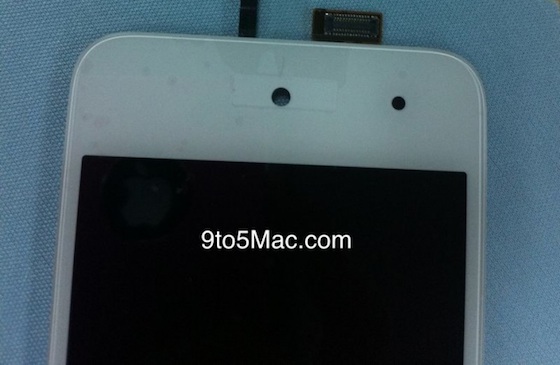
Lending credence to the claims of a forthcoming white iPod touch is the discovery of anew white front plate for the iPod touch obtained by parts and repair firm iFixyouri and reported to 9 to 5 Mac. The white part appears essentially identical to the black one used in the current iPod touch, and thus it can not be definitively stated whether the part is intended for a forthcoming model or was for a white version of the current generation that was ultimately scrapped before release.


Source: macrumors via 9to5

Harry Potter partners with Google, snubs Apple and PayPal


Google has joined forces with the most famous wizard in the world, Harry Potter, which could mean a big boost for two of its services while also resulting in a huge missed opportunity for Apple and PayPal. The partnership with the new Pottermore website by Harry Potter author JK Rowling will make the e-book version of the seven Harry Potter books available on Google's eBooks reader. The deal also makes Google's payment service Google Checkout the official third-party form of payment for Pottermore. By partnering with Google eBooks, Rowling has found a way to put her seven highly-in-demand books on smartphones, tablets, e-readers and computers without having to split the sales with companies such as Apple or Amazon, who typically keep about 30% of sales. Rowling's distribution method gives publisher's more leverage when it comes to selling e-books, said Craig Vodnik, chief blogger for BuildingKeystones.com, a blog about digital product e-commerce.


"It could be a really, really big deal if this works out based off the titles she's written and she's just so well-known," he said. "From the publisher's perspective it's a big deal because it could give them some control over how they distribute their products." Vodnik said Google landing Rowling is similar to when Apple finally got the Beatles on their iTunes catalog. In what must have been the tradeoff in the deal, Google's payment service Google Checkout appears to be the only way besides debit or credit cards to purchases the books from Pottermore. The inclusion of Google Checkout is a huge snub for PayPal, the original and most used third-party payment service online.

Instead, Google Checkout will be exposed to millions of Harry Potter fans looking to buy digital versions of the wizard stories. In the last few months, Google has been strengthening its push into the e-commerce and mobile payment fields, announcing recently it had begun testing a service called Google Wallet, which allows consumers to pay using their Android phones using a technology called NFC. The Harry Potter books could become the most purchased e-books upon their release if the franchise's performance at the box office and at book stores are any indication. The final Harry Potter film had the best opening of all time, scoring $168.6 million in the U.S. and Canada in three days. Four years ago, the last Harry Potter book had a similar release, selling 8.3 million copies in its first day, according to Guinness World Records.

Researchers create vaccine against heroin high


Researchers at the Scripps Research Institute have created a vaccine that stops the high one gets from from heroin. Designed as a therapeutic option for those trying to break their addiction, the vaccine produces antibodies that stop heroin as well as other psychoactive compounds metabolized from heroin from reaching the brain to produce euphoric effects.
Previous efforts to create a clinically viable heroin vaccine have struggled because heroin is metabolized into multiple substances that each produce psychoactive effects. To overcome this problem the researchers, led by the study's principal investigator, Kim D. Janda, targeted not just the heroin itself, but also the chemical it quickly degrades into, 6-acetylmorphine (6AM), and morphine.
They linked a heroin-like hapten (a small molecule that elicits an immune response only when attached to a large carrier) to a generic carrier protein called keyhole limpet hemocyanin (KLH), and mixed it with Alum, a vaccine additive, to create a vaccine "cocktail." This mixture slowly degraded in the body, exposing the immune system to different psychoactive metabolites of heroin such as 6AM and morphine.
"Critically, the vaccine produces antibodies to a constantly changing drug target," said G. Neil Stowe, who is first author of the new study. "Such an approach has never before been engaged with drug-of-abuse vaccines."
Testing the vaccine on rats provided promising results. After several booster shots of the vaccine, heroin addicted rates were found to be less likely to self-administer heroin by pressing on a lever. Only three of the seven rats that received the vaccine self-administered heroin compared to all of the control rats, including those that had been given a vaccine that only targeted morphine.
The team also found that the heroin vaccine was highly specific, only producing an antibody response to heroin and 6AM and not to other opioid-related drugs tested, such as oxycodone, and drugs used to treat opioid dependence, such as methadone, naltrexone, and naloxone.
"The importance of this is that it indicates these vaccines could be used in combination with other heroin rehabilitation therapies," said Janda.
"In my 25 years of making drug-of-abuse vaccines, I haven't seen such a strong immune response as I have with what we term a dynamic anti-heroin vaccine," Janda added. "It is just extremely effective. The hope is that such a protective vaccine will be an effective therapeutic option for those trying to break their addiction to heroin."
The Scripps Research team has also recently begun collaborating with researchers at Walter Reed Army Institute of Research to see if it is feasible to develop a dual-purpose vaccine against HIV and for the treatment of heroin addiction in a single shot.
Source: Gizmag

Russia launches 'largest telescope ever made'

To look at the Russian RadioAstron spacecraft, which launched from Kazakhstan this Monday, it doesn't seem particularly record-breaking. Its 10-meter (33-foot) antenna is certainly no match for those on earthbound radio telescopes, which can be up to 300 meters (984 feet) across. Once in orbit, however, its signal will join forces with those from ground-based telescopes to form one giant virtual telescope. Using a process known as interferometry, they will form the equivalent of a single radio telescope dish that at over 350,000 kilometers (217,480 miles) across is almost 30 times wider than the Earth. Although it's not actually one physical object, it is nonetheless being heralded as the largest telescope ever created.


Interferometry itself is nothing new, having been around since the 1960s. Very basically speaking, it involves combining the output of two or more geographically-separated telescopes to obtain one image with a resolution higher than either telescope could achieve on its own.
While radio telescopes have been sent into space for this purpose before, the plan is for RadioAstron's oval-shaped orbit to take it up to ten times farther than any of those other spacecraft have traveled, at 10,000 to 390,000 kilometers (6,214 to 242,335 miles) from Earth. Working with telescopes in locations such as West Virginia, Germany and Puerto Rico, it should be able to capture details at 10,000 times the resolution of the Hubble Space Telescope.
Plans for its use include the observation of a huge black hole at the center of a nearby galaxy, M87.
Although already launched, it will still be a few months before the spacecraft reaches the starting point of its orbit, and then goes through a check-out period with its ground control team at Russia's Lebedev Physical Institute Astro Space Center. Once it starts receiving and transmitting data ... well, there will be a lot of it. It's estimated that RadioAstron will be taking in up to 144 megabits per second, which will be continuously relayed to the ground.
So far, however, there is only one 22-meter (72-foot) dish set up to receive that data, near Moscow. This means that much of the data will simply be lost. It is hoped that throughout RadioAstron's five-year mission, more receiving stations can be set up.
Source: Gizmag via New Scientist